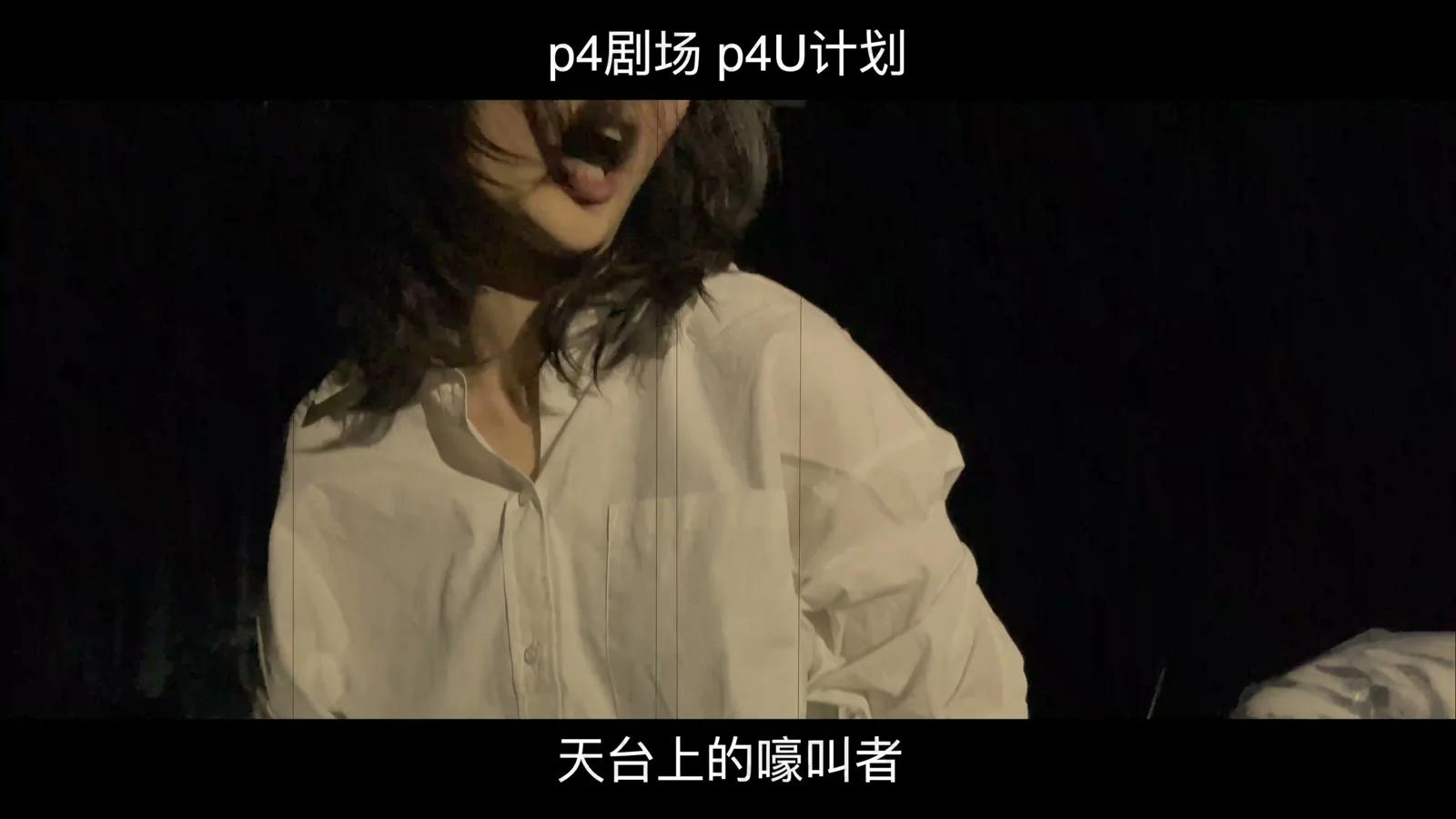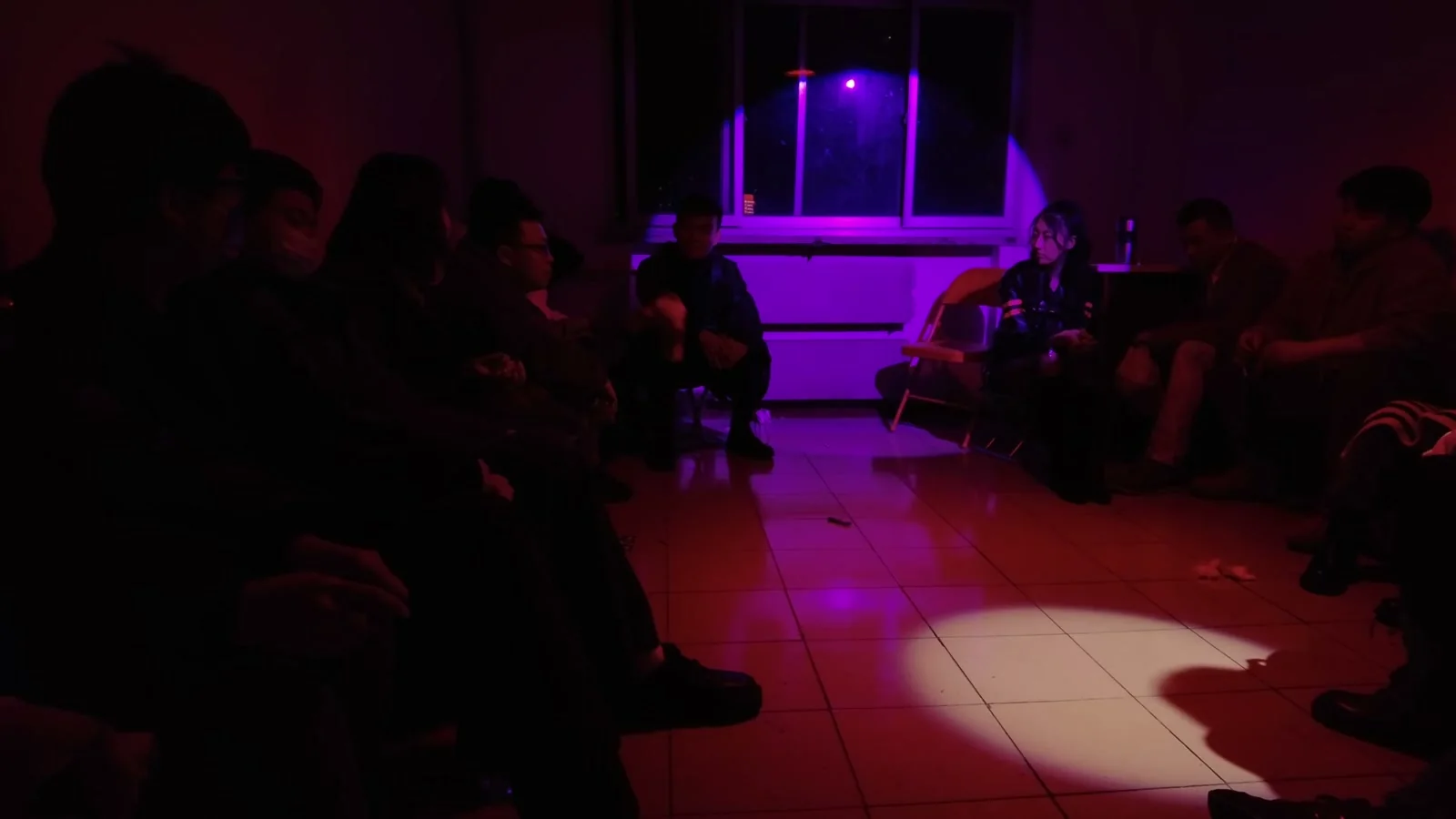
The body becomes the unit of measure
Capacity is measured not by seats but by tolerable bodily distance, difficulty of turning and collisions of sightline.

03 / 07
Decentralized theatre under spatial compression
Inside a 16-square-metre office, eight makers and fifteen spectators entered a cellular structure of viewing. The smaller the room, the more legible the pressure between people became.
Iceberg pushed P4 away from a relatively stable venue toward a dense, small-scale nomadic practice. Instead of treating the office as a limitation to overcome, the work used crowding, obstruction, silence and the difficulty of leaving as theatrical conditions.
Bodies, characters and acts of looking were compressed into an almost black-box state. Visible action formed only the surface; underneath lay relations that were concealed, frozen, suppressed and repeatedly exposed.
PROJECT RESEARCH LAYER
Iceberg turns a 16-square-metre office into a high-density system of performance and spectatorship. It does not create stage illusion; it keeps everyone aware of breath, gaze, obstruction and the difficulty of leaving.
Capacity is measured not by seats but by tolerable bodily distance, difficulty of turning and collisions of sightline.
The cellular structure forces spectators to accept obstruction and partial information. Every Iceberg is different, and every version incomplete.
Attention is not fixed on one performer. Sound, minor movement and nearby spectators’ reactions continually redraw the center.
WORKING SEQUENCE
Bring people close enough that they cannot ignore one another.
Replace panoramic control with incomplete sight.
Move attention among person, sound and spectator.
Document the limits of looking rather than fabricate a perfect record.
PROJECT COORDINATES
The continuing question
When spectators cannot retreat to a safe distance, can looking remain only looking?