06 / 07
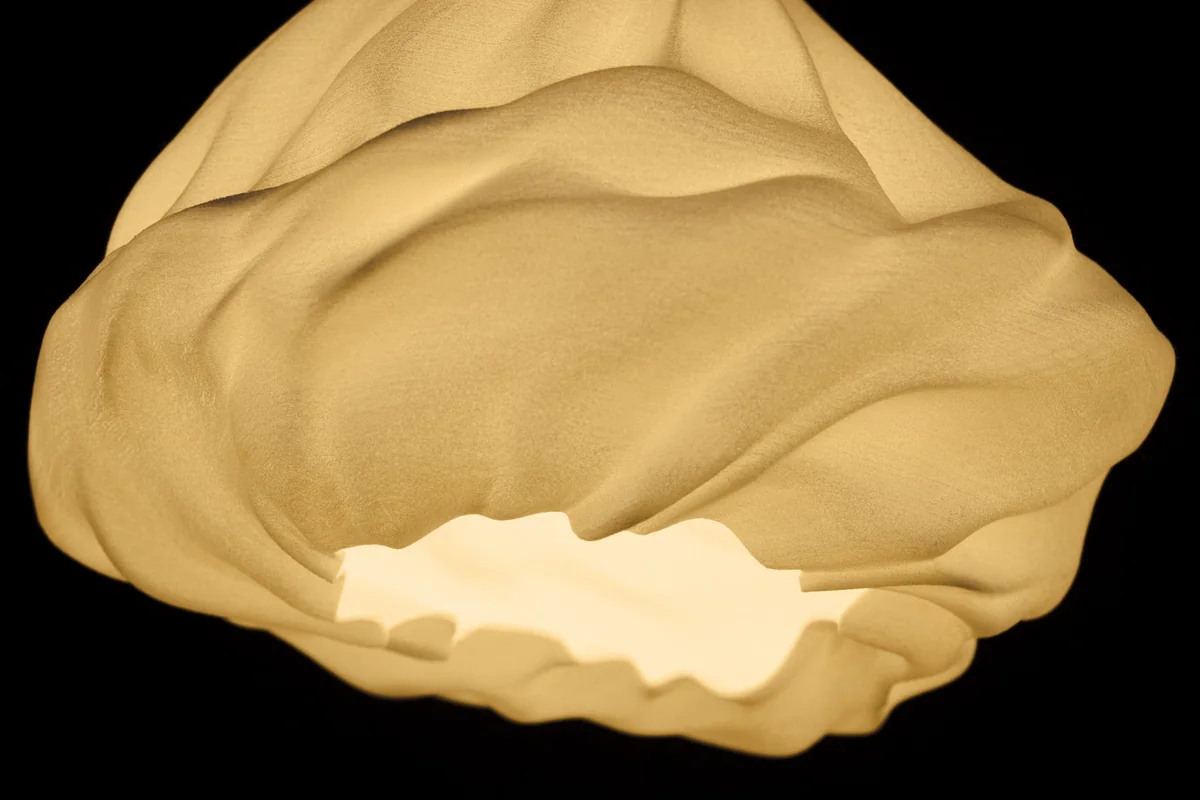
Gewu Studio | Twelve Water Lamps
A studio chapter from 2012
- Year
- 2012–2013
- Medium
- Studio collaboration, 3D printing and product design
- Role
- Co-founding member; market work and design feedback
In 2012, He Fa participated in co-founding Gewu Studio, working on the market side and contributing to design discussions. Twelve Water Lamps was created by Song Bowen.
Project statement
Gewu Studio was founded in 2012. As a co-founding member, He Fa mainly worked on the market side and also contributed to design discussions. Photography, product design, 3D printing and communication unfolded in the same studio.
Twelve Water Lamps was Song Bowen’s 2012 graduation project at the Central Academy of Fine Arts. Referring to Ma Yuan’s Twelve Views of Water, it used parametric modelling and 3D printing to turn water patterns into lighting forms, and was exhibited at Beijing’s LiangDian Design Center from December 2012 to January 2013.
A line through the work
This period brought photography, product design, 3D printing and market work into one studio, and became an early step in He Fa’s movement from images toward space and live situations.
Mountain Beyond Mountains
The origin of a structure of seeing