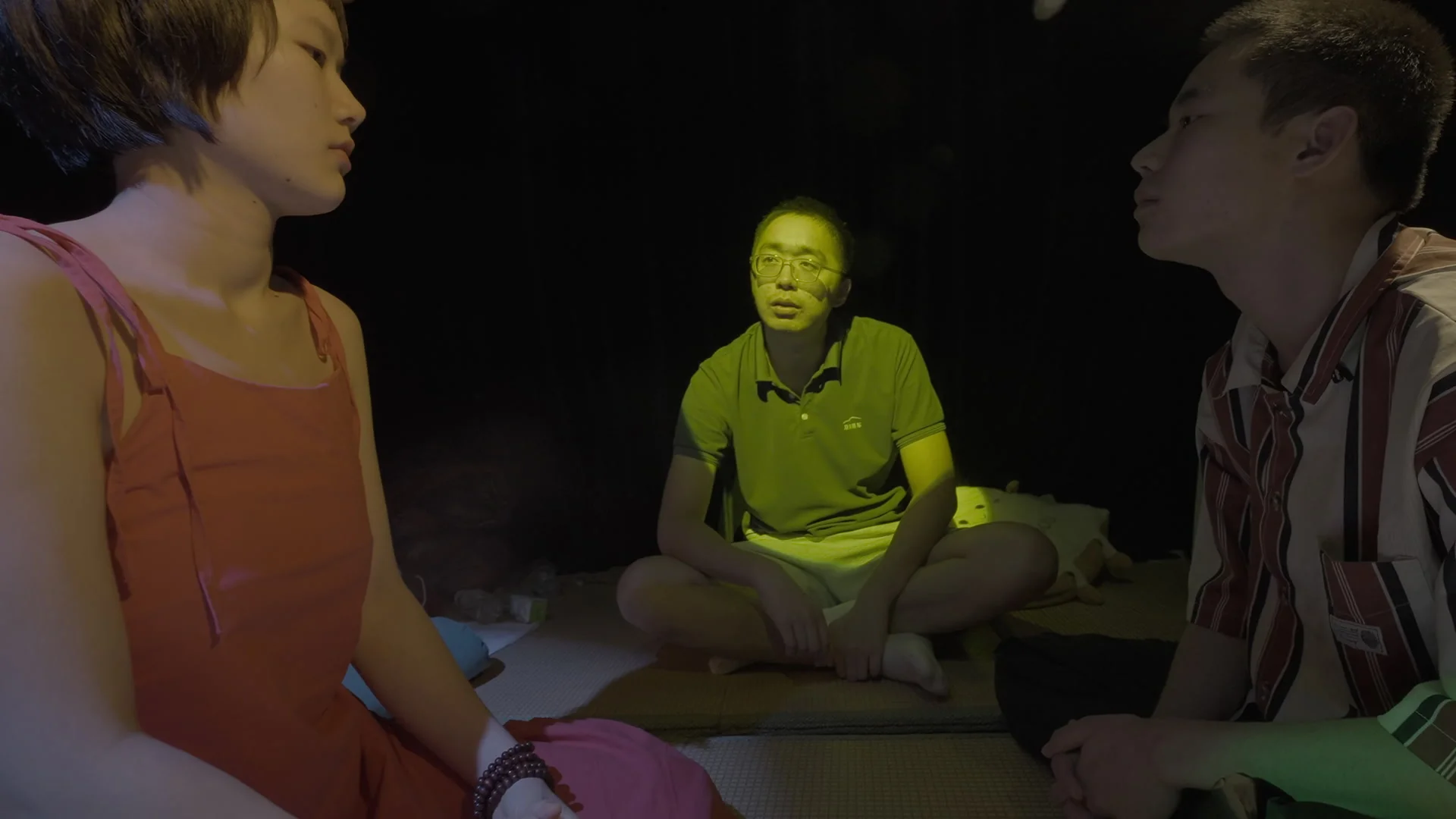
01 / 07
Human Surrender / Shoot Self with You
From rehearsal and live event into film
- Year
- 2023–2024
- Medium
- Film, moving-image theatre, performance and spatial narrative, approx. 156 min
- Role
- Director / Artist
The project moved through casting, rehearsal, filming and public performance in 2023; an approximately 156-minute film cut was completed in 2024.
Project statement
Human Surrender / Shoot Self with You took shape through casting, rehearsal and filming in 2023. Participants faced one another and the camera, while the director remained inside the relations he was organizing.
At 19:30 on 26 August 2023, The Last Rehearsal took place at Ciyu Bookstore (Middle Theater branch). The final performance before filming wrapped combined theatre, performance art, live sound, installation, audience interaction and continuous photography; material from the event entered the film.
After completing the film, He Fa continued to work with its voices, dialogue, breath, images and excerpts through sound sessions, explanatory shorts and frame-by-frame notes.
The film's festival journey has three stages: selection by Filmmaker Sessions Volume 8, Los Angeles Lift-Off Film Festival, the Summer edition of the Los Angeles Film and Documentary Awards, and TheaterFilmFest - FIKTIVA in 2024; a place in the Boden International Film Festival's 2nd Quarter semifinal the same year; and Best Feature Film at the Esoteric Film Festival in 2025.
FILM & SOUND
Trailer and sound excerpt from Human Surrender / Shoot Self with You
After completing the approximately 156-minute film cut, He Fa continued to work with its dialogue, breath, voices and ambient sound. Watch the trailer and listen to an audio excerpt developed from the film’s sound material.
Do You Need Me to Say It for You? — sound rewrite excerpt
A line through the work
When performers, director and camera all remain inside the relation, can looking stay neutral?
P4 Theater
Making work through concrete relations