Testimony is never pure
Once addressed to spectators and camera, confession is shaped by memory, self-protection, role expectation and public judgment.
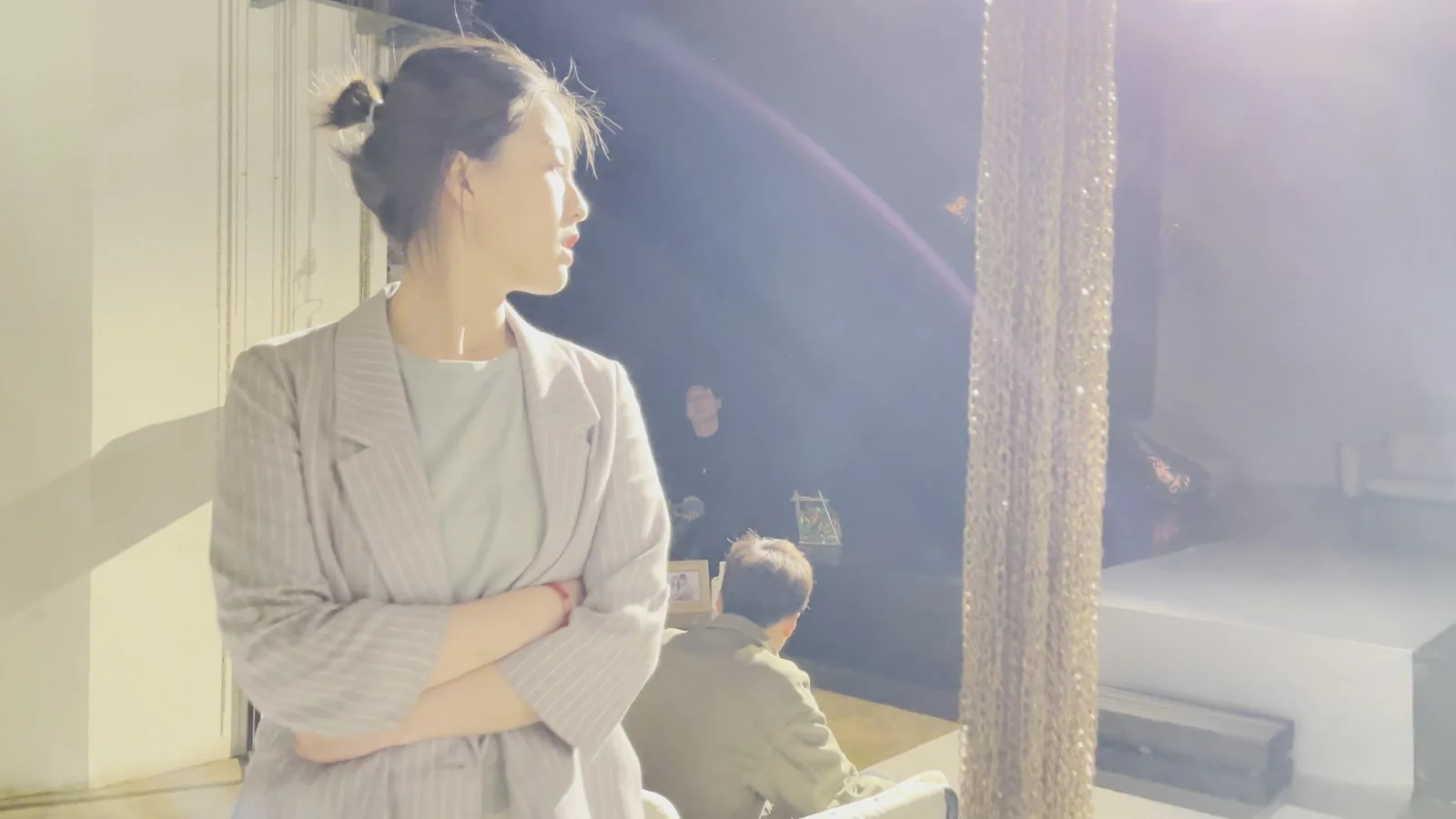
05 / 07
Looking, judgment and the allocation of positions in intimacy
Failure, hesitation, accusation and self-defence became theatrical mechanisms: who may accuse, who must explain and who cannot leave?
The project layered reality-show logic, documentary, live filming and participation. Audience responses did not remain external commentary; they were collected, amplified and returned to the situation as part of the performers’ actions.
The work is less concerned with a love story than with the positions from which intimacy is watched. It asks how closeness becomes testimony, how emotion becomes public judgment, and how people perform themselves again under collective observation.
PROJECT RESEARCH LAYER
Love Theatre / Accusing the Love Centrists places reality format, documentary, live filming and audience response inside one structure. It does not decide who is right; it observes how judgment is produced, amplified and returned to participants.
Once addressed to spectators and camera, confession is shaped by memory, self-protection, role expectation and public judgment.
Audience responses are gathered and returned to the situation, so spectatorship no longer remains outside the work but changes subsequent action.
The work retains misunderstanding and unverifiable elements, resisting the reduction of intimacy to consumable conclusions.
WORKING SEQUENCE
Let participants describe the relation from their own positions.
Make the camera a live pressure rather than later documentation.
Turn spectator judgment into a condition for the next action.
Allow the relation to leave the theatre unfinished.
PROJECT COORDINATES
The continuing question
When intimacy enters public view, does confession create freedom—or another role?

How an image becomes a manufacturable structure